Behavioral Finance

May 28, 2026
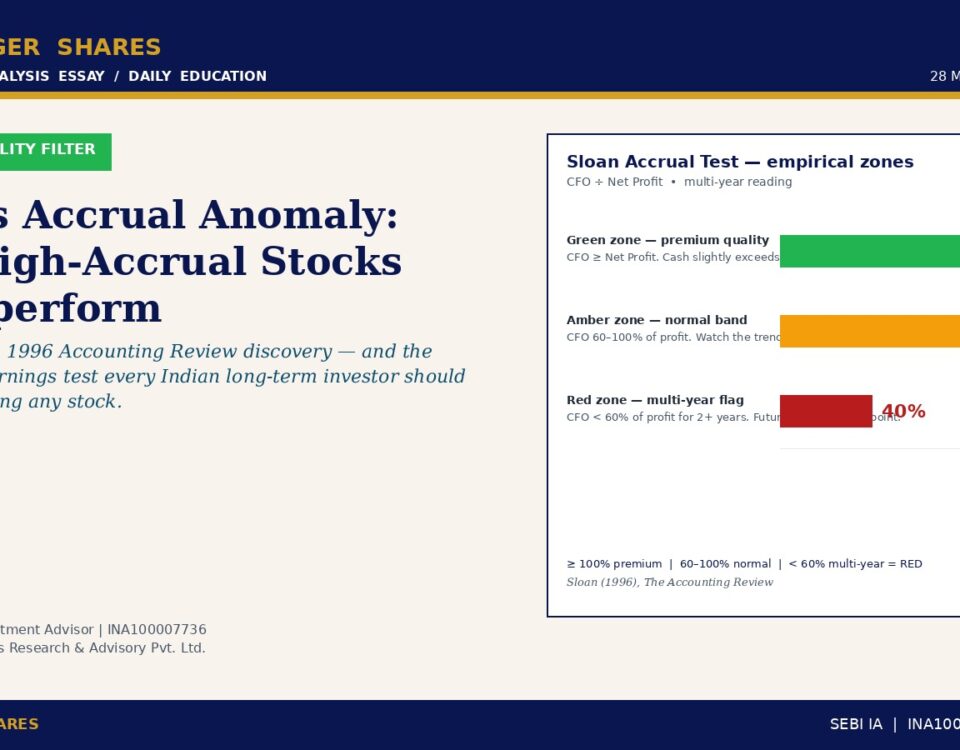
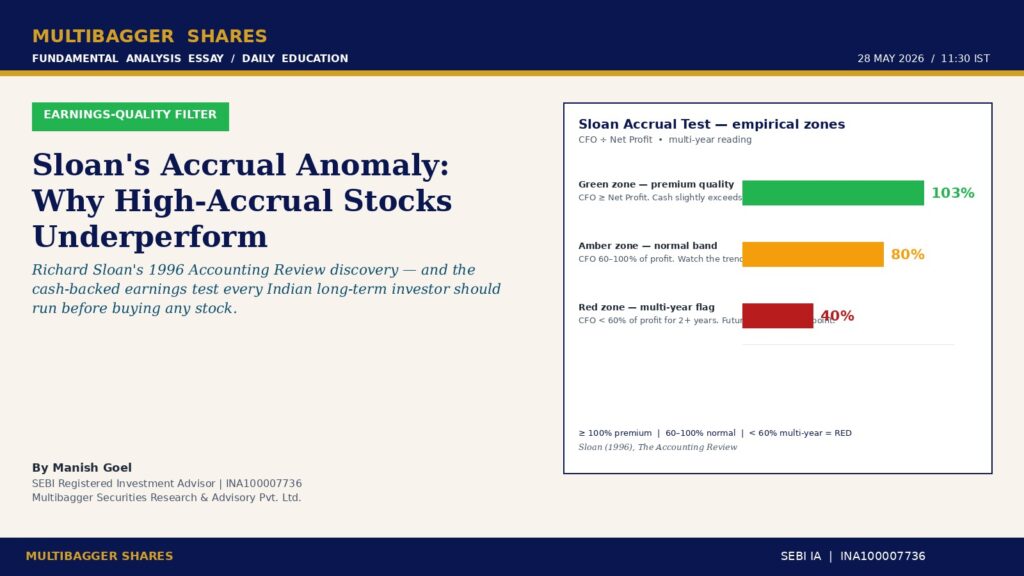
Article header: Sloan's Accrual Anomaly: Why High-Accrual Stocks Underperform, with intro paragraph and author byline on a beige page.

Sloan’s Accrual Anomaly: The 1996 Accounting Review Discovery That High-Accrual Stocks Underperform — And Why the Cash-Backed Earnings Test Is the Single Most Powerful Forensic Filter for Indian Long-Term Investors

Richard Sloan 1996 Accounting Review discovery on high-accrual underperformance and the cash-backed earnings test for Indian long-term investors.
May 27, 2026
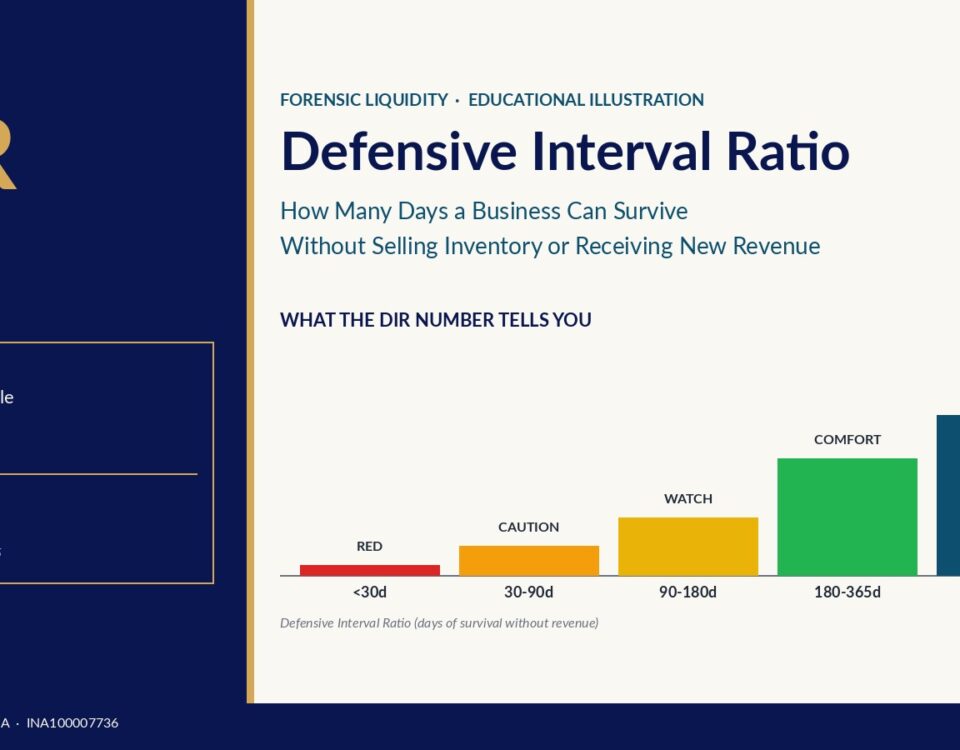
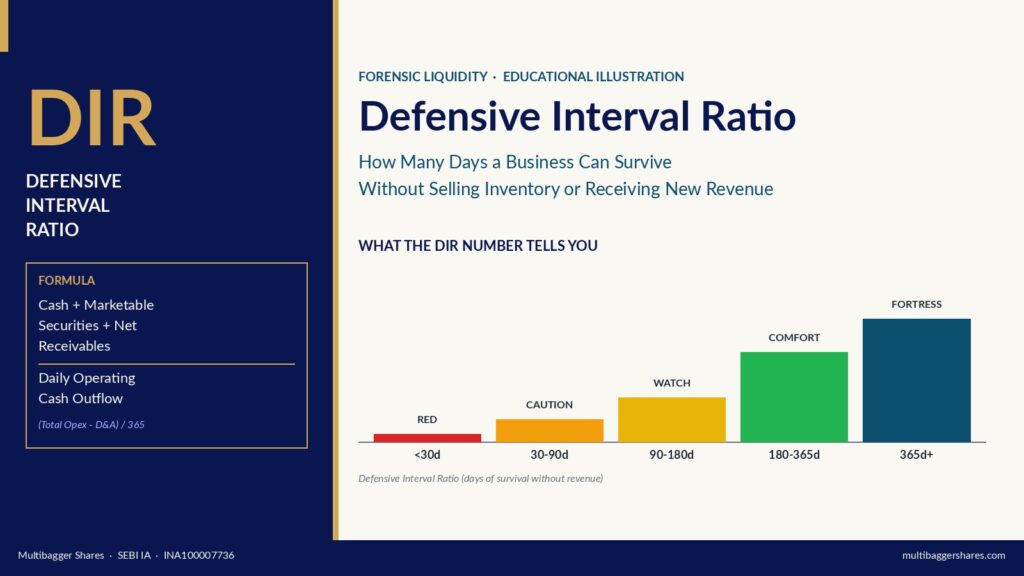
Left dark blue panel showing the DIR title and a box labeled Formula with cash, marketable securities and net receivables, plus daily operating cash outflow; right side presents a cream background infographic titled Defensive Interval Ratio with a five-bar chart (Red

Defensive Interval Ratio: The Forensic Liquidity Metric That Reveals How Many Days a Business Can Survive Without Selling Inventory or Receiving New Revenue

How to read the Defensive Interval Ratio — the forensic liquidity metric that counts days of survival without selling inventory or receiving new revenue, illustrated with audited FY25 markers from a disciplined Indian specialty-biotech operator.
May 26, 2026
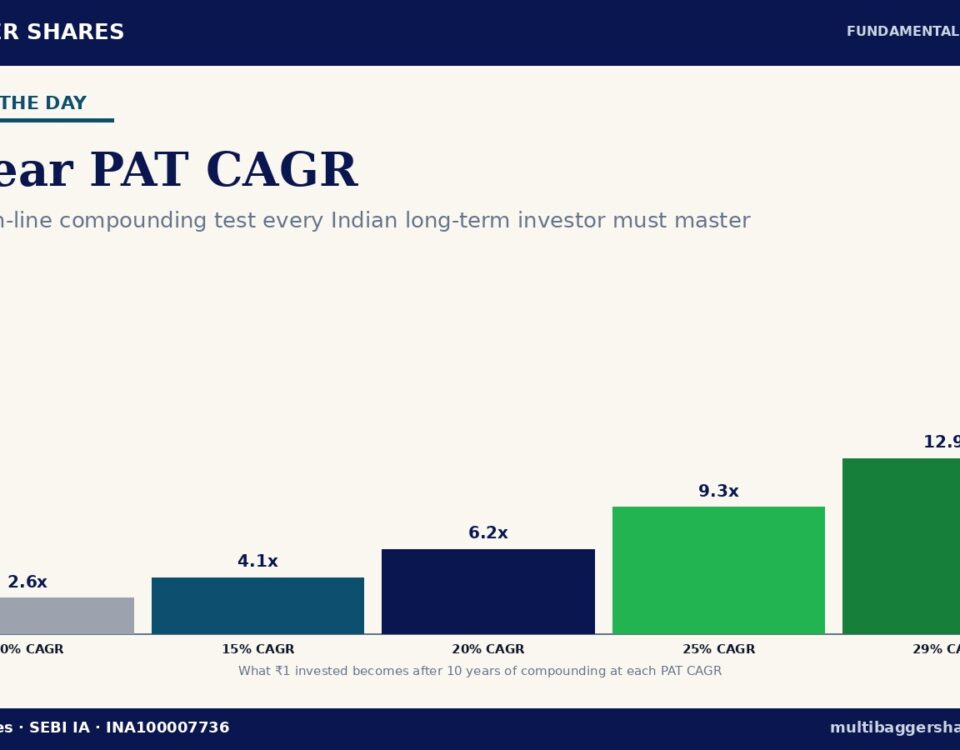
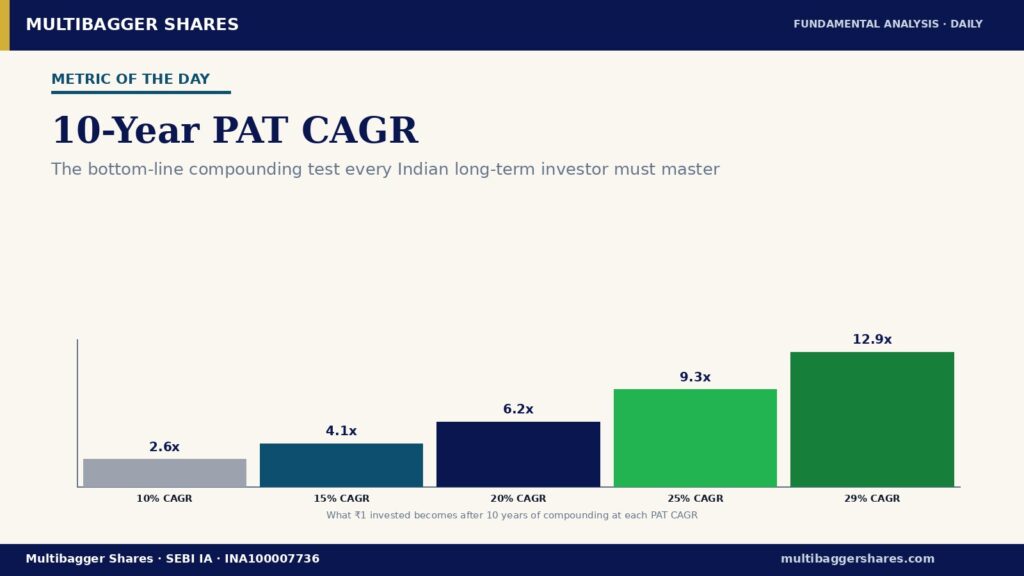
Year Pat Cagr Cover 960x750 - Manish Goel Portfolio Management Service

10-Year PAT CAGR: The Bottom-Line Compounding Test Every Indian Long-Term Investor Must Master

Learn how to read 10-Year PAT CAGR, the single most concentrated measure of a decade of bottom-line compounding — with Indian-context benchmarks, four diagnostic archetypes, six classic traps, and a worked illustration from Titan Biotech's FY25 audited disclosures.
May 25, 2026
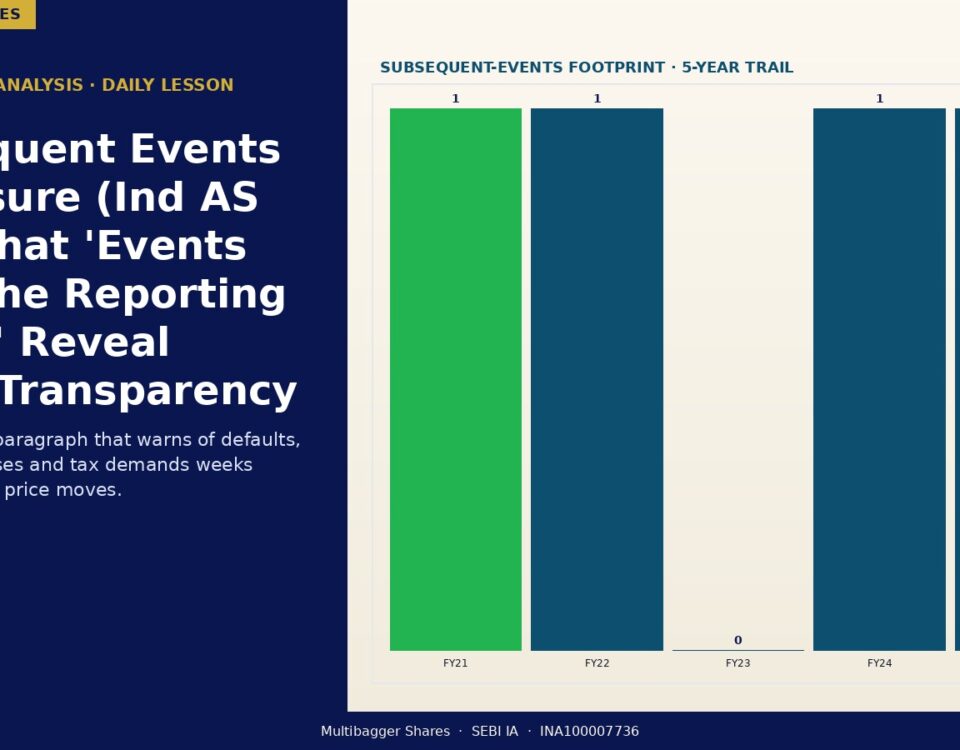
Two-column layout: left panel with the title 'Subsequent Events Disclosure (Ind AS 10): What Events After the Reporting Period Reveal About Transparency' and a short descriptive paragraph; right panel shows a bar chart titled 'Subsequent-Events Footprint · 5-Year Trail' with five vertical bars for FY21–FY25. The FY21 bar is green, the others dark blue; values above bars indicate counts (FY21=1, FY22=1, FY23=0, FY24=1, FY25=1).

Subsequent Events Disclosure (Ind AS 10): What ‘Events After the Reporting Period’ Reveal About Corporate Transparency, Investor Risk, and Management’s Willingness to Share Bad News on Time

India's investing universe has grown to over 11 crore investors, but few know how to read the most under-appreciated paragraph in any audited annual report. Ind AS 10's 'Events After the Reporting Period' note can reveal a billion rupees of damage the headline numbers never show. Here is the 5-step framework, the two-category rule under SA 701, and an illustration of what disciplined disclosure looks like in practice.
+91-7380122211